

Standing Desk vs. Sitting Desk: Exhaustive Review
Desks shape how we work. There’s the classic sitting desk, but you can’t miss the standing desk trend. Many folks claim standing helps focus, fights pain, and supports wellness. But is it the best bet for everyone? I spent the last six months switching between both. Ready for the honest breakdown?
What’s the Big Deal?
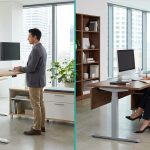
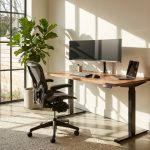
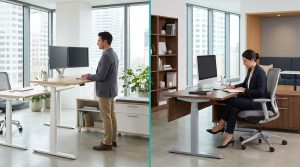
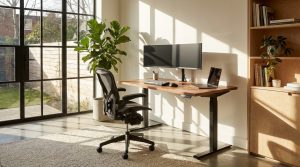
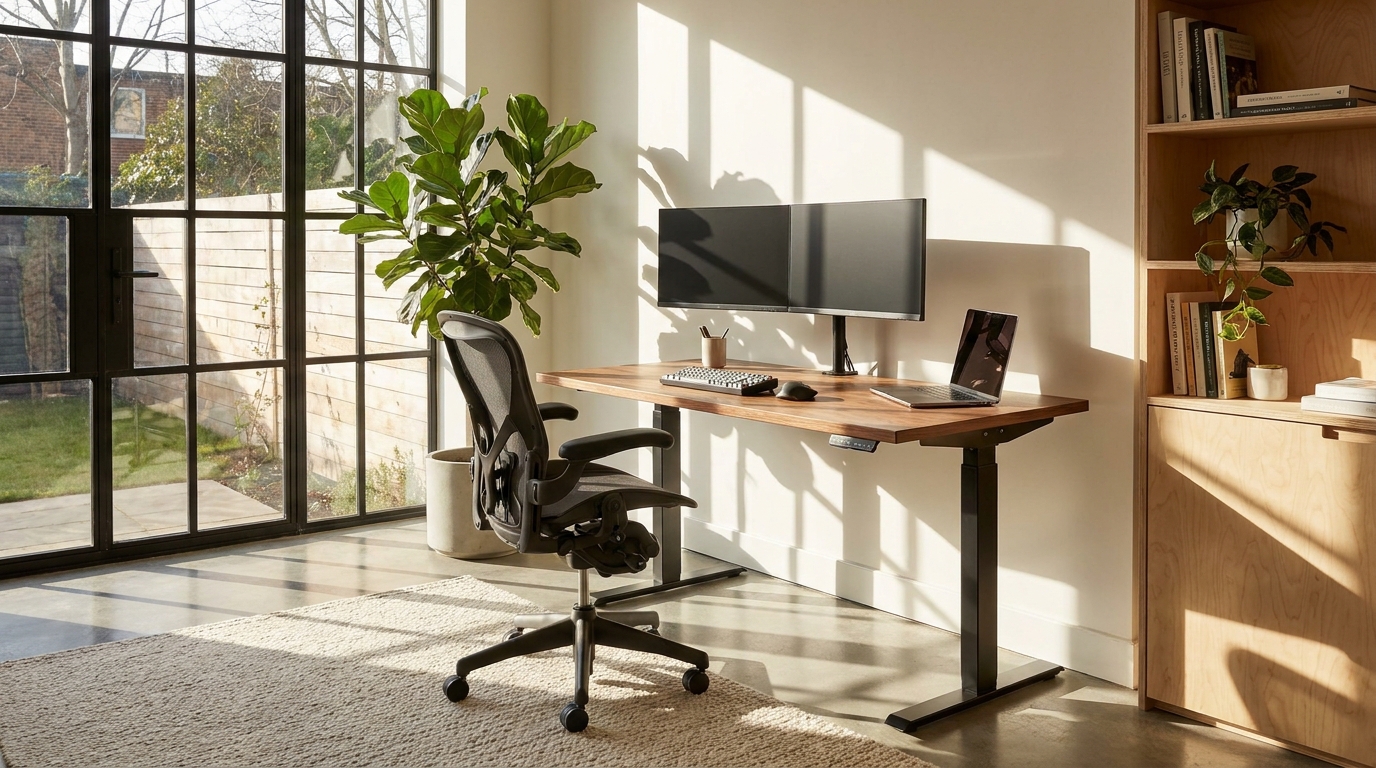
Set up in my home office hadn’t changed for years. That changed last fall. I bought an Uplift V2 standing desk and paired it with a comfy Herman Miller office chair. My plan: half my work at each station. Results weren’t what I expected.
Both desk types have tons of fans and critics. Do you stick with tradition or join the standing crowd? You’ll see strange claims on both sides—some swear standing desks erased years of back pain; others say it’s all hype. My own back stiffened up if I stood too long. Sounds familiar?
Health Impacts
Sitting for hours isn’t new and studies tie it to back pain, tight hips, and even worse focus. Muscles slump. Your lower back can go numb. But standing for long spells brought a new set of issues: sore knees and feet, sometimes swelling at my ankles. Do you get tired after standing for three or four hours? I did—quickly.
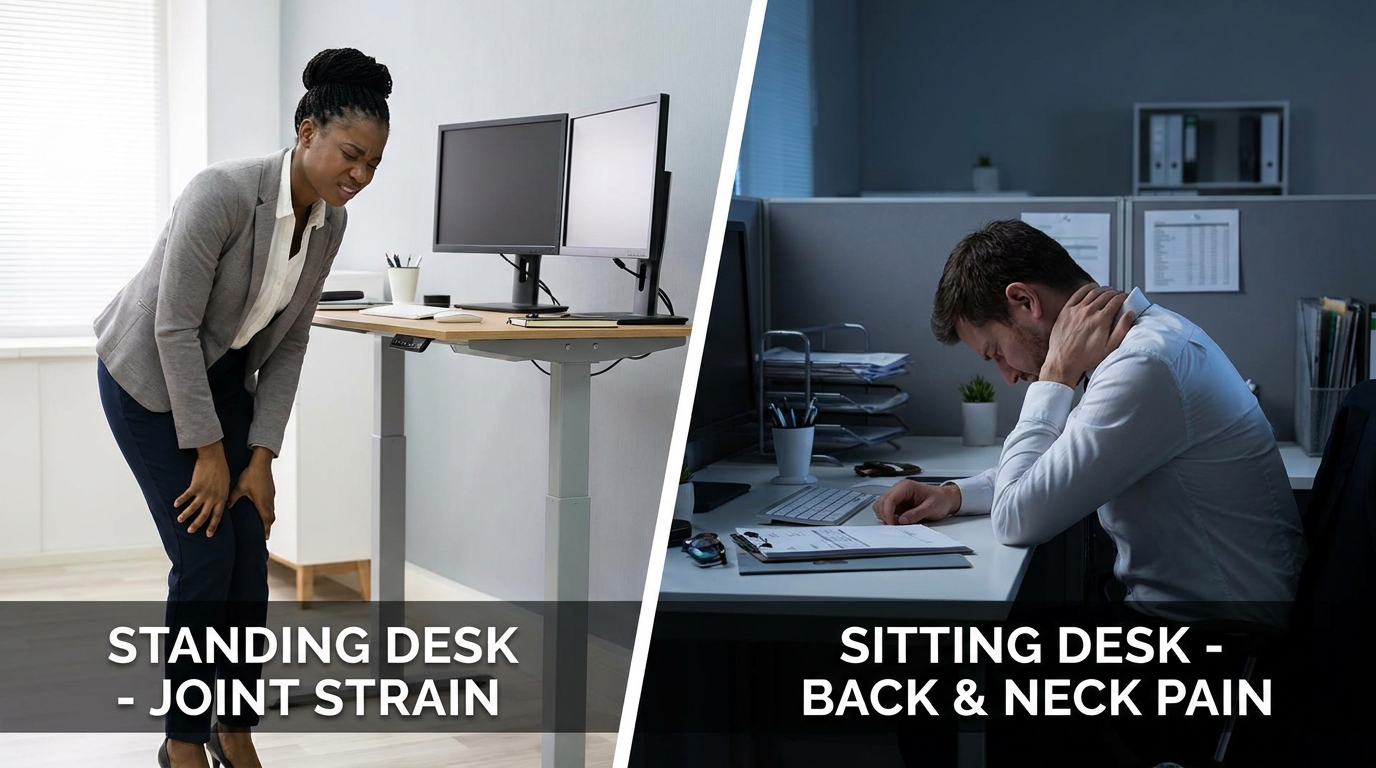
Researchers at the Mayo Clinic compared both styles. The data’s leaning toward moderate change. Switching between standing and sitting, and adding short walks, helps most people the most. It’s not about forcing yourself to stand all day. That’s a myth. Harvard Health backs this up.
Productivity and Focus
This surprised me most. I felt more awake when standing—No 2 pm yawns. But after a week, my legs craved rest. My typing speed dropped by 8% when using the standing desk, especially during longer stretches (say, over an hour at once). Sitting was clearly easier for video calls or longer research sessions.
Some surveys—like the 2022 WorkFit survey (n=1,000 US office workers)—show people feel standing desks boost energy. But the kicker? No measurable hike in output overall. Emails still went out at the same pace. Calls didn’t get sharper or shorter because I was on my feet.
Comfort Over Time
A cushioned standing mat saved my feet the second week. I needed it. Still, after three months, I defaulted to a hybrid habit: sit in the morning, stand after lunch, sit again around three. Comfort wasn’t constant at a standing desk. In contrast, a well-set sitting desk with a strong chair never nagged my knees.
Posture and Ergonomics
Standing helps you tweak posture. I caught myself hunching less. But poor setup can make things worse. My monitor needed more height adjustment than I guessed—neck strain crept in until I got a longer monitor arm. The standard desk height for sitting (around 28–30 inches) fit my build, but when standing, I had to trial-and-error to get elbow angle just right to avoid wrist pain.
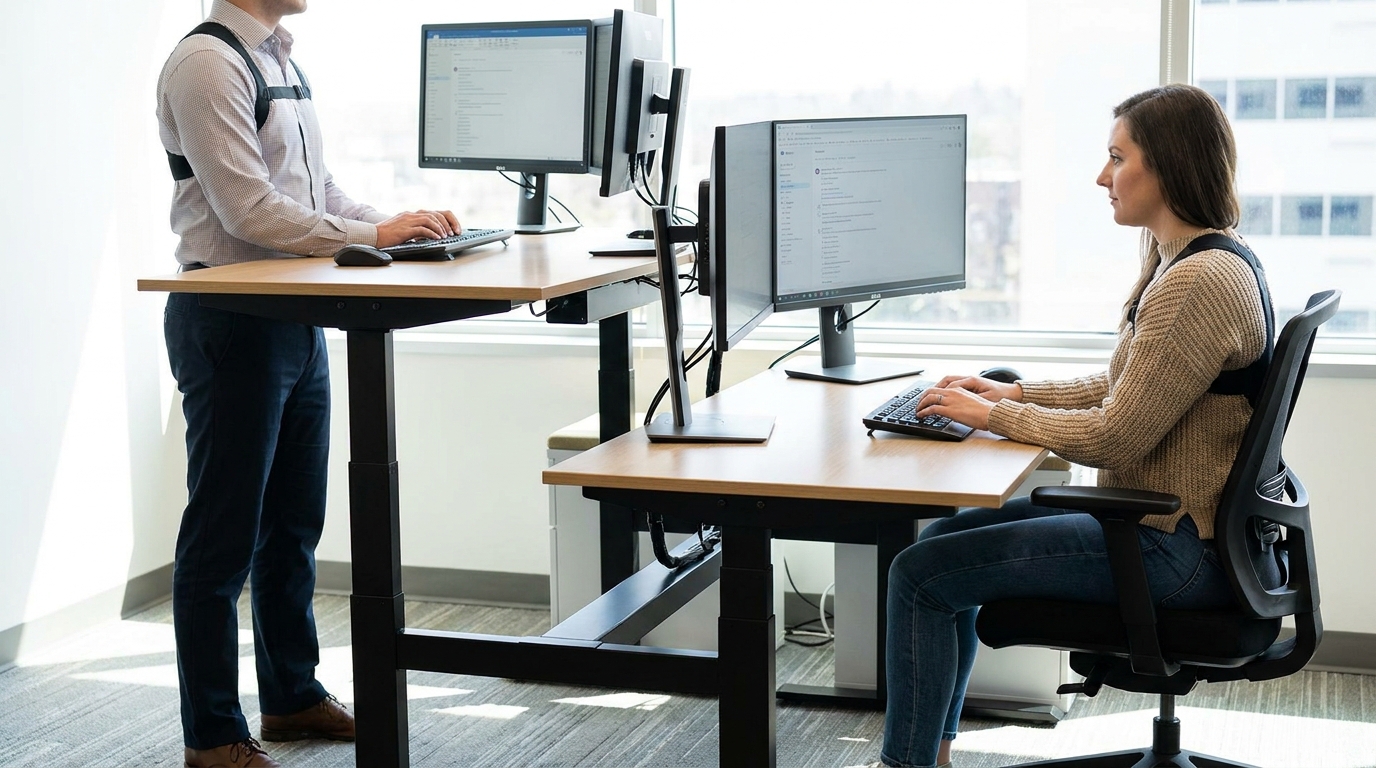
Many sitters use footrests and wrist pads. Standers need anti-fatigue mats, and may even wear new shoes into the home office. Equipment cost and setup takes time.
Style and Space
My big standing desk was an instant conversation piece. Its electric rise made for easy switching, but it ate up more floor than my last desk. Cables and clutter got harder to corral. Stand desks look sharp—modern, sleek—but classic desks can fit in tight corners or against a wall. Space is never unlimited.
If your work from home station needs to fit with the room, standing options aren’t always subtle. Some folks want the look and function in one. It’s a tradeoff.
Cost Differences
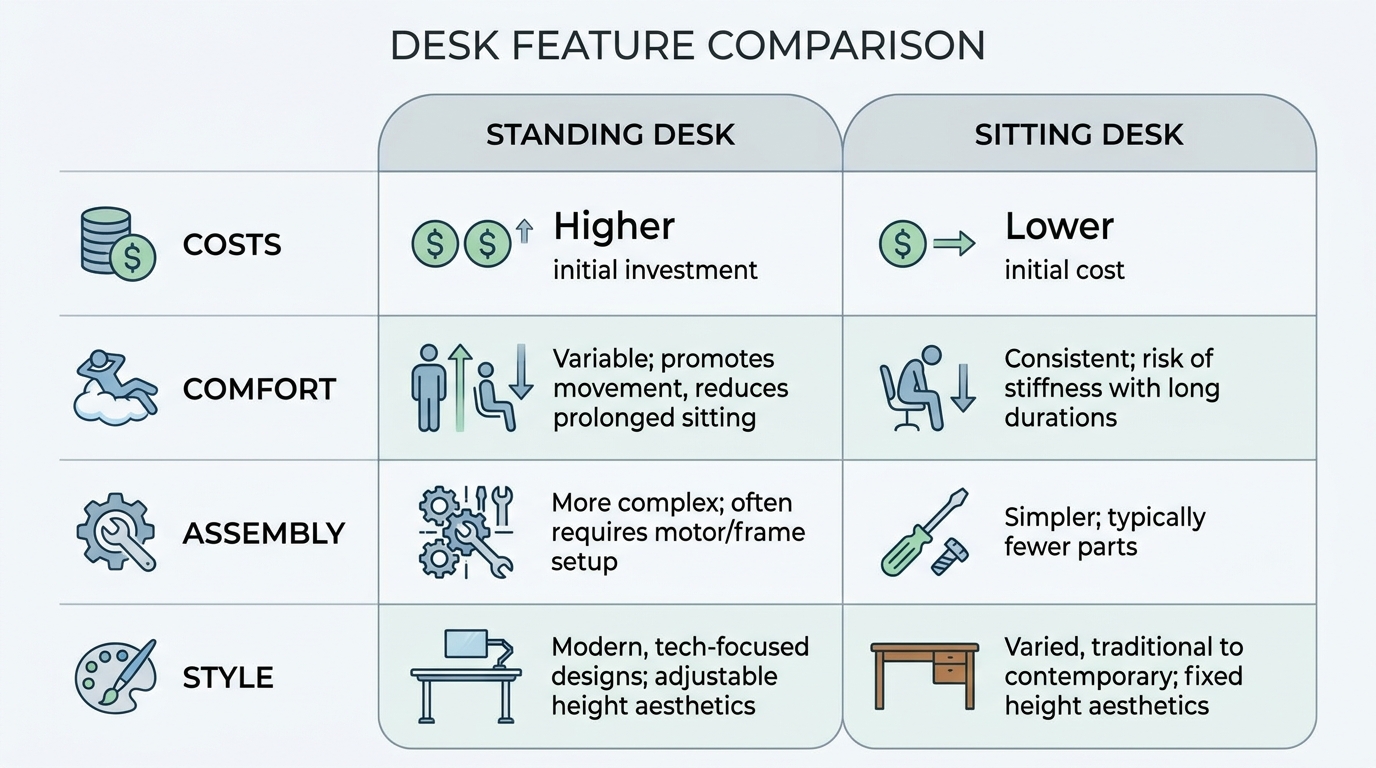
Standing desks aren’t cheap. The Uplift V2 ran me $620 after deals; my old IKEA Malm desk had cost $130. Cheaper standing models wobble and make noise. Sit-stand converters are $100–300 but take over current desk space.
What’s your budget? Can your employer help? The base cost for a real standing desk is at least triple that of a simple, sturdy sitting desk.
Assembly & Use Experience
Assembly matters. My standing desk needed two people and one hour just to sort all the bolts. Sit desks go up with a screwdriver and maybe a snack break. The rise-fall motors run quiet, but the extra controls sometimes freeze if you unplug things. Sitting desks? Sit down, power on, done.
Who Needs Which?
Not all work and bodies are the same. My six-foot friend kept stooping to type at my standing desk—until we jacked up the height and used an extra-tall monitor. If you type all day, you’ll stretch your feet more at a stand desk. If your knees pop, you may end up sitting again, no matter what gurus say.
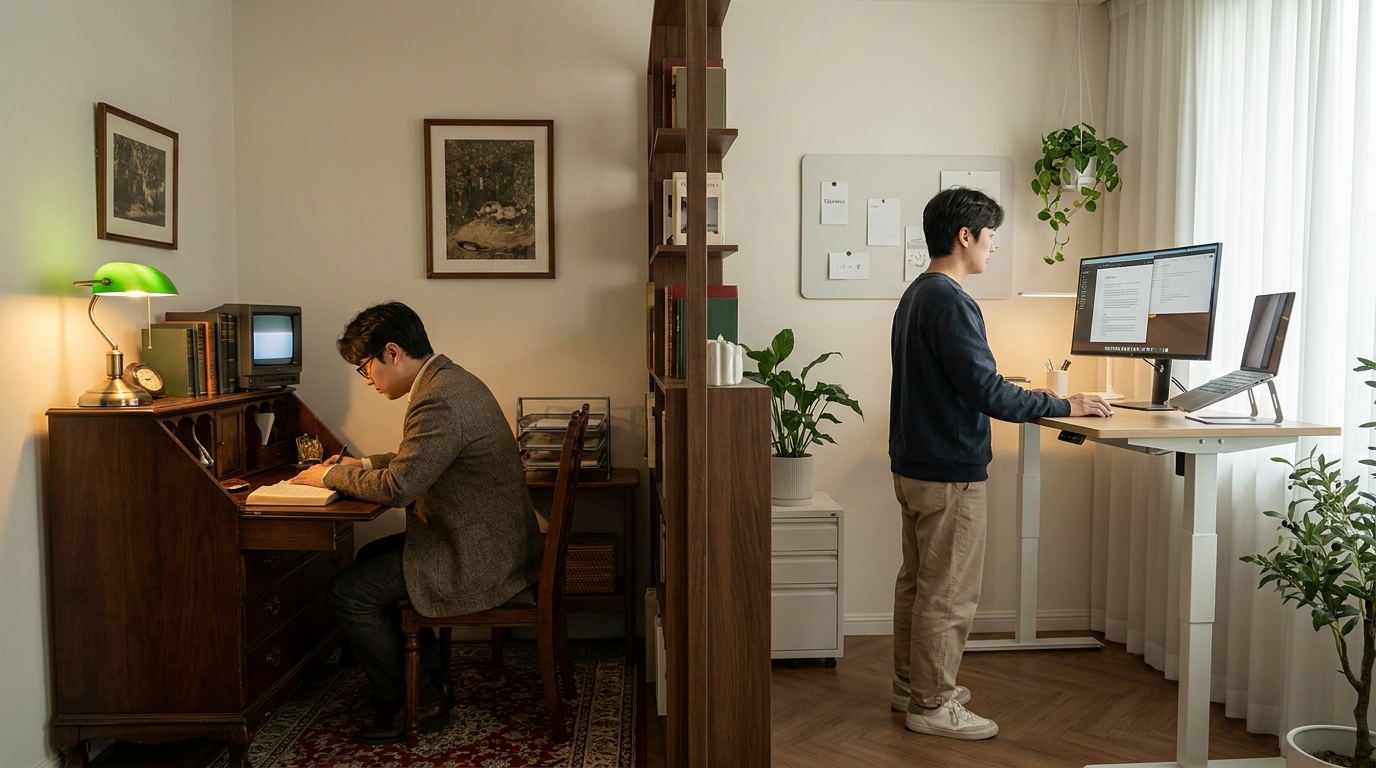
Writers tend to favor classic desks. Designers and team leads rave about the energy lift a stand-up spot gives. I noticed that my mood spiked from standing during quick brainstorms, but faded when editing for long hours.
Noise and Distractions
Standing desks usually have small motors to lift or lower. Newer ones barely hum, but my old converter screeched. Sitting desks make no sound unless you drop something. Twice, I knocked coffee off my desk while adjusting height. Lesson: clear the space first. Shifting between sit and stand also can draw attention—do you like a little spotlight?
Wear and Tear
The motor on my V2 desk survived rain and pets. But I did see fingerprints and wear along the edge much faster than with my sitting setup. Friends chipped the robot leg pipes by knocking them with boots. A sitting desk with strong edges and legs might last longer—fewer moving parts means less to break.
Real-World Case Studies
Gina from Chicago spent a year at her start-up, using a standing desk all day. After four months, she felt stiff, so she added a tall stool. Her comfort shot back up. Kyle at a local law firm got a basic sit desk and said he feels just fine—his trick is ten walks a day, not forced standing. Which story feels more like you?
Expert Opinions
Ergonomists suggest “movement is key.” A 2023 White Paper from the Ergonomics Research Association drove home small movement as an answer. It’s not about picking a side—mixing both works better. Most physical therapists suggest popping between stand and sit every 30–45 minutes. That’s a lot of desk shifting.
Comparison Table
| Feature | Standing Desk | Sitting Desk |
|---|---|---|
| Cost | High ($300+) | Low ($50-200) |
| Comfort Over 4 hrs | Declines | Stable if ergonomic |
| Health Risks | Sore joints w/ overuse | Back pain w/ no breaks |
| Style impact | Modern, big | Classic, minimal |
| Assembly | More steps, need tools | Quick, easy |
| Adjustability | High if motorized | Low |
| Durability | Mid – more moving parts | High if solid build |
The Alternatives: Hybrid and Desk Converters
You don’t need to pick sides. Hybrids and converters attach to your old table, letting you rise after lunch or sit to read. Cheaper, but less sturdy than full stand desks. A few setups shook if I leaned on them. Most folks like hybrids for flexibility and easy reset to the old ways.
Ultimately, there’s no magic fix—the right desk is the one that fits your habits and space. Are you willing to fiddle with settings and snaps daily, or do you want to sit steady all afternoon?
The Verdict
Both desk types have wins and quirks. Standing desks cue movement and modern looks, but they tire the legs and wallet. Sitting desks work for marathon tasks, but need breaks and good support. Combining both is your best bet for energy, health, and a serious work groove. I rate the standing desk experience specifically at 8.4/10. The cost and comfort limits are there, but it pulls ahead if you hate being still—or love gear.