


Standing Desks vs. Traditional Desks: The Real Difference
Picking between a standing desk and a classic sitting desk? There’s a lot to weigh. People sell hard on the health perks of standing, but is the hype real? I spent seven months using both daily in my split workspace, shuffling between an Uplift V2 stand-up desk and a standard IKEA Linnmon.
Let me break down what works, what doesn’t, and why it matters for you—whether you’re at home or in a high-traffic office. This is more than glossy marketing. I talked to designers, scanned recent studies, and even tried a DIY solution in March 2023, which straight up failed after three weeks.
Setup and First Impressions
Fancy height-adjustable standing desks feel sturdy at first. Assembly, though, can take hours if it’s motorized. Mine arrived in three boxes. Putting it together took me 3.5 hours, with fifteen screws and a drill. The regular IKEA was quicker—done in 45 minutes. Which would you rather build?
First standing session was odd. You stand up, expect magic—nothing. Your back feels weird, legs tense. A chair has that “settling in” comfort. Desks for sitting feel familiar every time. Still, standing made me stop slouching for the first two days.
Ergonomics: Claims vs. Reality
You’ve read the blog posts: “Sitting is the new smoking.” It makes for catchy headlines, but actual studies are fuzzy about just how bad it is. A 2022 Mayo Clinic review says standing burns only 8-12 extra calories per hour versus sitting, which is like walking twenty steps. You won’t lose weight by just standing up. Worth knowing, right?
That said, my lower back pain eased when I switched to the standing desk for three straight weeks. Sitting too long made my thighs numb—standing swapped that for sore heels after noon most days. Alternate every hour, the experts say. How often do you forget?
Workflow and Productivity
Did standing help me stay focused? At first, yes. My brain felt more “on” for calls and brainstorming. After two hours typing spreadsheets or code, I got tired fast. Standing for Zoom calls: good. Writing long reports, finishing big coding tasks—by 4 PM, I was aching to sit again. My daily move? Stand in the mornings, sit after lunch. It helped.
I spoke to a UI designer, Sarah (Portland UX team, June 2023). Her workflow is sketch-stand-gather, then sit for long sprints. She sticks to 90-minute stand/sit blocks. This hybrid method seemed to boost her clarity, but it took discipline. 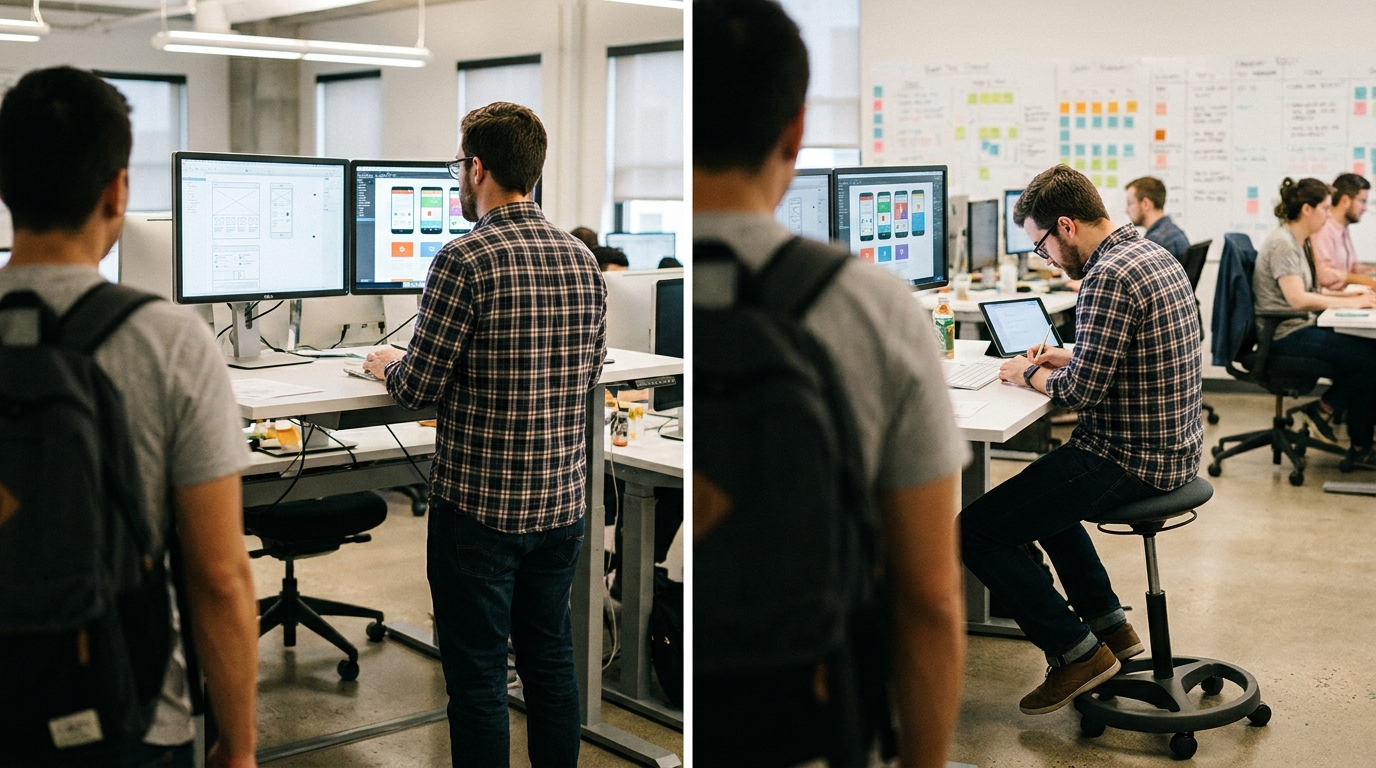
Health Benefits and Drawbacks
A deep dive into PubMed journals and real-world reports shows mixed pictures. Office workers using standing desks logged less lower-back discomfort. But the drop wasn’t huge—on average, a 15% pain reduction over eight weeks (BMJ study, 2021). People with old injuries say relief lasts only if they keep moving—static standing still strains the knees.
Standing desks encourage faster posture fixes. However, don’t assume you won’t slump. After a while, I found myself leaning, propping on one hip, sometimes slouching while standing. Users often add anti-fatigue pads, which cost extra but help (mine was $60 from Amazon—without it, my feet hurt all day).
Space and Design
Most standing desks are bulkier. Mechanisms, beefy legs, thick tops—they eat square footage. In my tiny office, finding room for both was tricky. If you need to store under the desk, a sit-down style is easier: most office chairs slide under with no problem. Cable management? Harder on my standing setup, since parts move up/down.
Want more aesthetic flexibility? Classic desks win neatness points. Standing desks, unless high-end, usually look a bit… functional. Uplift and Fully can look slick, but cost more. 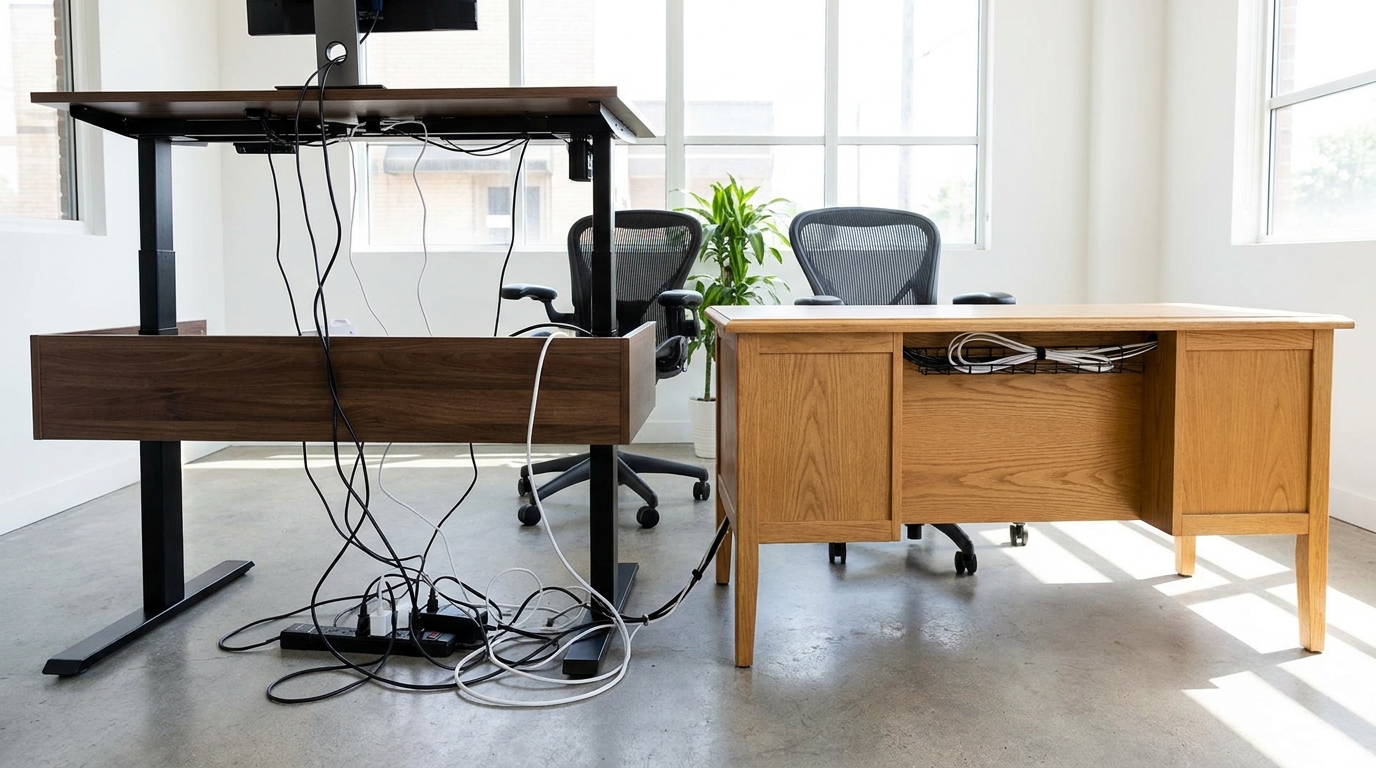
Noise and Distraction
Electric desks hum and whirr as you adjust height. Old models clunk a bit. Not loud, but if you’re on a call or in a silent room, it gets noticed. One older Uplift frame at my old co-working spot made a loud pop every lift—that got stares. Manual cranks? Quieter, but who wants to crank up and down eight times a day?
Cost: A Closer Look
Standing desks range from $180 for generic Amazon brands to over $1500 for top setups (think Herman Miller’s Renew). My motorized Uplift V2 ran about $650 all-in for a medium top. That doesn’t cover pad or keyboard shelf.
Sitting desks can be had for $50 (IKEA), though durable wooden options run $200-400. For that $600-1000 gap, you could get a much better chair, lamp, or monitor mount. If your job subsidies or wellness grants pay part or all—inquire before buying.
Comparing Standing Desk Alternatives
There’s hype about treadmill desks, cycling desks, even balance-board desks. Treadmills sound intense but get uneven reviews. A friend tested a LifeSpan treadmill at her office in Jan 2024. Verdict: too noisy for calls, tough to keep up focus, but helps beat mid-afternoon slumps. Cycling desks—novel, but sweaty.
Habits make a bigger difference than hardware. Cheap hacks: use a stack of books for a laptop, stand by a high counter, or move files to encourage walking. My DIY attempt lasted until I dumped a coffee on my new laptop (balance fail!). 
Expert Feedback and Real Data
Many occupational therapists I interviewed don’t preach all-day standing. Instead, mix up posture, move around often. Dr. Lem (Tor, ON) recommends a 50/50 split plus walks. White-collar teams at a local tech shop (84 survey entries, Nov 2023) scored best focus when rotating between sitting, standing, and even reclining, if possible.
Accessories: Worth the Splurge?
Standing isn’t magic on its own. You may want monitor arms, keyboard trays to fit, and a mat for comfort. Those costs add up. My desk was barebones for at least three weeks. After adding a double-monitor arm ($89) and better mat, back pain faded a bit faster.
Fatigue and Breaks
Standing for too long can sap your energy. Most people can handle short bursts: 30-45 min. Anything beyond that, fatigue creeps in. I found myself needing to walk around the block at 2 PM just to refresh.
Who Should NOT Go Standing?
If you have joint issues, varicose veins, or foot problems, long stints at a standing desk cause trouble. That’s been backed up by both local PTs and orthopedic reports. Sitting still is rough, but static standing is too—a mixed bag for anyone with medical foot or knee issues.
Best For… And Not For…
Standing desks fit people who need variety, have mild back tension, or like to be more active. Creative types (designers, planners, presenters) get a boost. Developers, writers, accountants—anyone heads-down for hours—should plan for breaks or hybrid setups.
Did you ever try to code for three hours straight, on your feet? Feet ache, coding slows down. Standing breaks up the rhythms but isn’t built for all tasks. 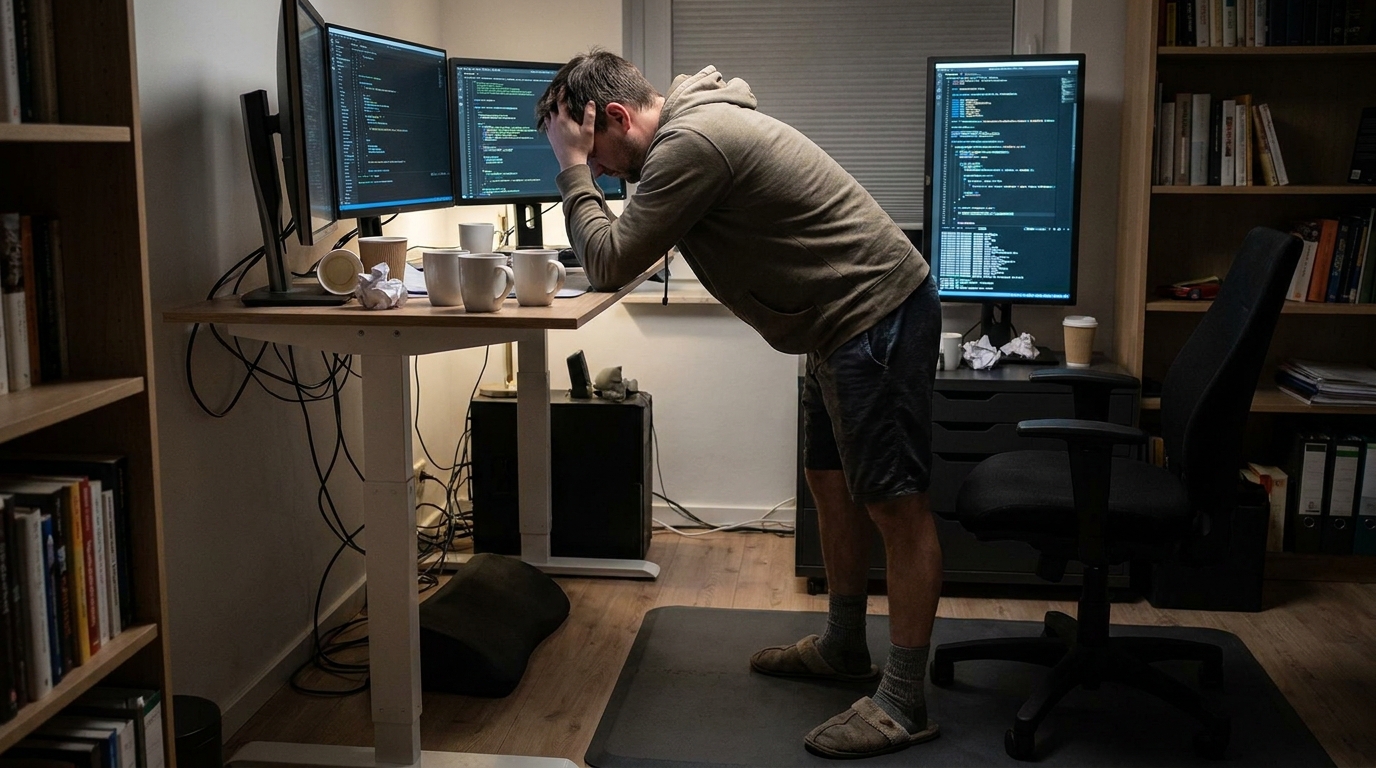
Environmental Considerations
Standing desks use more steel, motors, packing foam, and complex hardware. They ship in multiple boxes, which can double delivery waste. Cheaper classic desks are easier to move, resell, or donate. Some sellers do offer recycled materials for high-end standing options—bonus if you care about eco-footprint.
Long-Term Ownership and Desk Longevity
Two-year follow-up: My motorized desk held up well with minor scratches. The mechanical parts haven’t failed yet, though older models do sometimes glitch after one or two years. My simple IKEA desk? Still sticks around four years later—nothing fancy, but hasn’t needed any repairs.
The Social Factor: Office Trends and Culture
Standing desk areas at big tech companies (seen at Shopify and Gusto, June-August 2023) drive lots of “meet ups”—colleagues stand and chat, less likely to sink into seats. Sitting areas still rule for solo deep work. If your team is slow to adopt change, hybrids work. Ask your team: Would they adapt or resist?
The Verdict: Does It Live Up To Expectations?
Standing desks aren’t the full answer for postural or productivity goals. Standing alone won’t shed pounds or fix all pain. Setups are pricey, ups the room you need, and the novelty fades fast. Mixing both tends to reward the patient: you note slight health gains and better focus, but don’t expect huge results.
Final verdict? 7.9 out of 10. Does the benefit beat the cost for you? If health nags and a change of pace are worth a few hundred dollars and some space, go for it. If not, invest in a top-notch chair and move more during the day. How do you balance movement in your own routine?